
Planning on moving to Europe with a dog but worried about how to fly with a big pup? We’ve been there. When we relocated to Italy with our 70-pound hound, Lucy, we learned firsthand what it really takes. While smaller dogs can curl up in their carrier under an airplane seat, big dogs like Lucy usually travel in cargo with the luggage. This is a stressful, expensive, and sometimes risky experience for both pets and their humans!
If your furry companion is too large to fit under the airplane seat in front of you, have hope. There are a growing number of pet-friendly travel options to avoid putting your large dog in cargo. International airlines are offering pet-safe programs, there are new charter flights designed specifically for pet owners, and, most interestingly, Italy’s Deputy Prime Minister and Transport Minister, Matteo Salvini, is pushing for more pet-friendly travel options in Italy. In September 2025, Salvini took part in a demonstration flight from Milan to Rome on ITA Airways, which allowed two large dogs to fly in the cabin!
While there are more pet-friendly travel options available if you are moving to Europe with a dog, there are still a lot of steps you need to take to get there. Therefore, we’ve packed this guide with 8 essential steps, plus a timeline to ensure a smooth process. After moving to Europe with our dog, we wrote it all down to give you the confidence you need to start planning right now!
In this international pet-friendly travel guide, you will learn how to:
- Avoid the Myths and Misinformation
- Research Country-Specific Requirements
- Find Airlines and Pet Shipping Companies
- Book Shorter Flights and Allow for Longer Connections
- Travel Internationally with a Service Animal
- Visit a USDA-Accredited Veterinarian
- Organize a Pet Travel Timeline
- Prepare for International Arrival
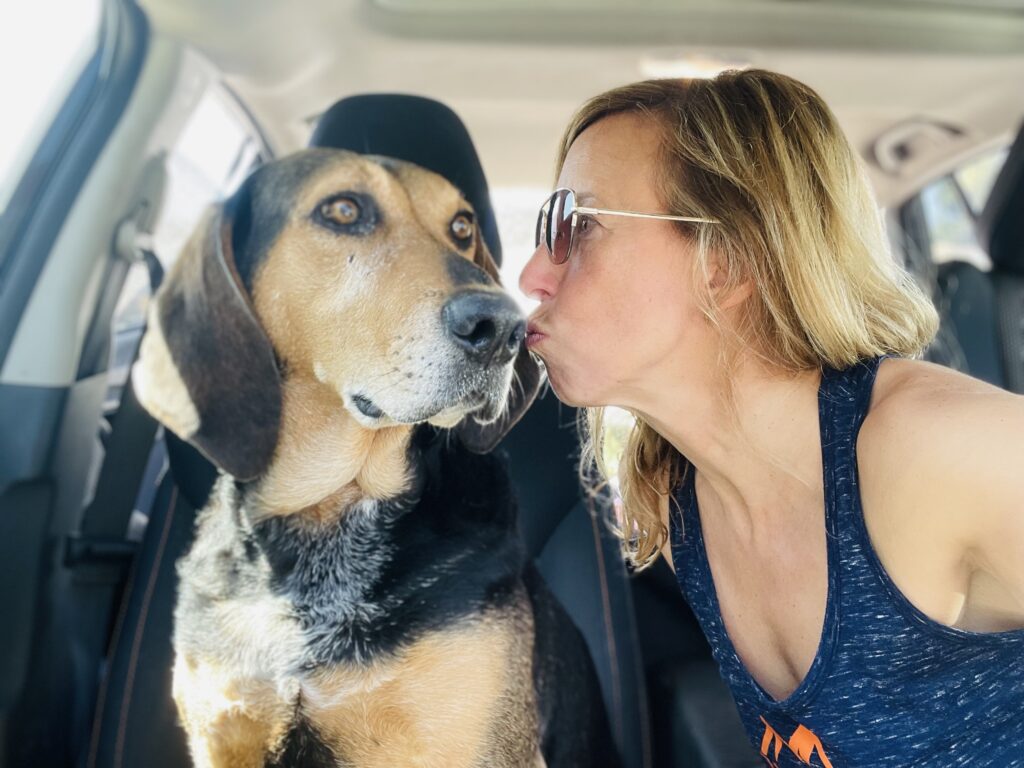
Lucy comes with us everywhere, and the thought of leaving her behind when we moved to Europe was out of the question.
1. Avoid the Myths and Misinformation Surrounding Moving to Europe with a Dog
First things first. If you’ve already begun to make travel plans to move abroad with your large four-legged friend, you will hear all sorts of myths and misinformation. It started the moment we mentioned we were moving to Italy.
- Did you buy Lucy a seat on the plane?”
- “Are you going to sedate her?”
- “Isn’t quarantine mandatory for international travel?”
- “How will she go to the bathroom?”
Sadly, this list goes on. And these do not even include the traumatizing stories of pets that didn’t make it. The more we spoke about our plans, the closer we got to our departure date, the more questions were thrown our way. Instead of following potential misinformation and becoming incredibly stressed about moving to Europe with a dog, start by educating yourself on what’s possible!
2. Research EU Country-Specific Requirements for Your Dog
Before booking any flights, the first step is to research the entry requirements for the EU and your chosen destination. Keep in mind, some countries in the EU ban certain dog breeds (snub-nose, fighting breeds, pitbulls), while others require you to get insurance.
For moving to Europe with a dog, here are the standard items you’ll need:
- ISO Microchip
- Rabies Vaccination
- International Health Certificate from a USDA-accredited vet
- DOT Attestation Forms (for longer flights/bathroom needs)
- DOT Documentation for Service Animals (if applicable)
- EU Passport (if you are traveling to several countries within the EU)
Check official government or embassy websites. Make a checklist of all required paperwork and crate requirements for moving to Europe with a dog to avoid delays, quarantine, or denied entry at check-in or customs.
One of the most bittersweet stories I heard was from our friend, Regina, and her tale of relocating their dog, Guapo, to France. It was such an ordeal that she wrote a blog: Relocating an American Dog to France. I recommend you bookmark this and read it next, as it details how sometimes the best-laid plans can go awry.

The moment Guapo was finally united with his family in France. (Photo credit: Regina Hope Sinsky-Crosby)
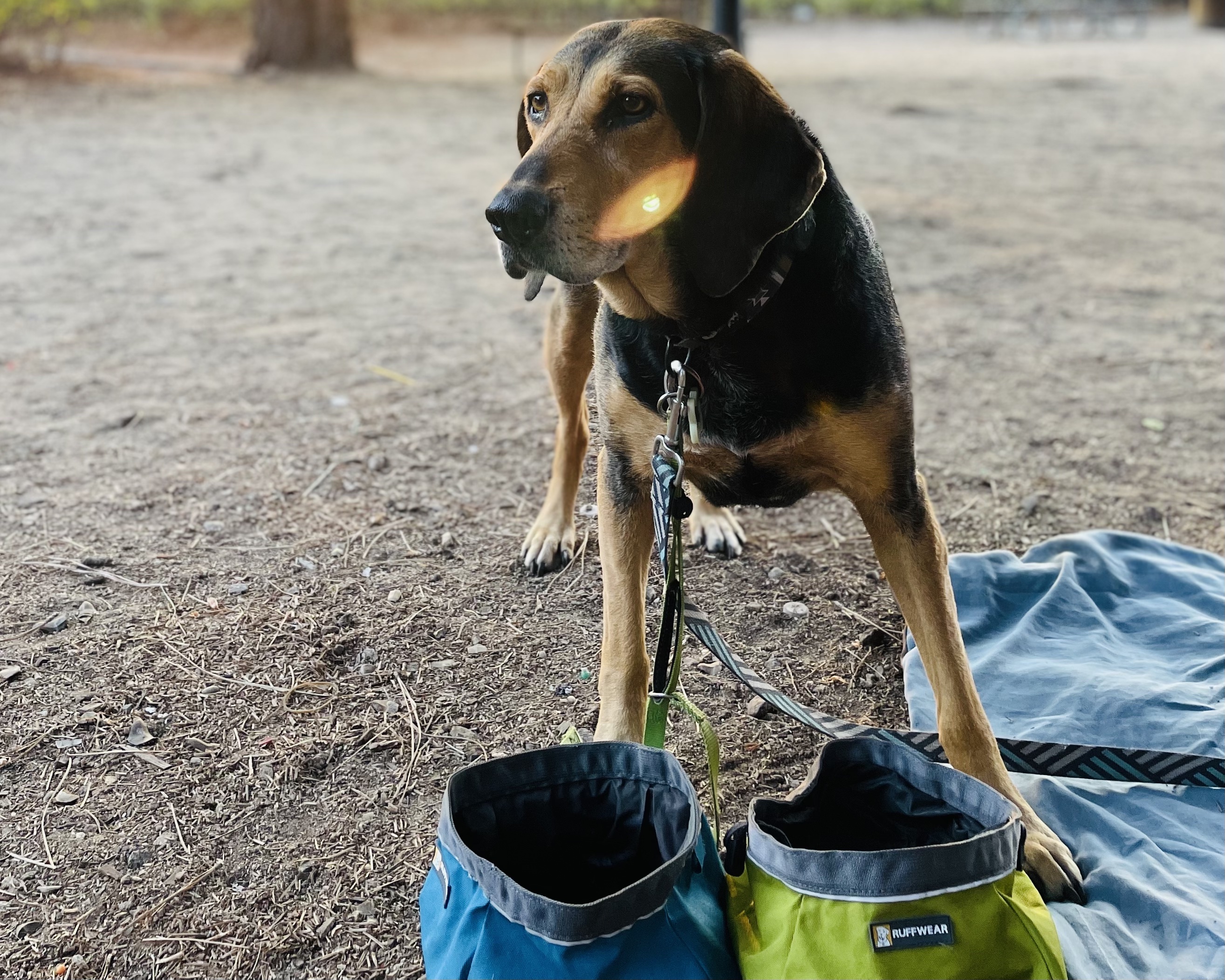
3. Find Airlines and Companies that Can Support Your Move to Europe with a Dog
Dog-Friendly Private and Semi-Private Charter Flights
At the top of the list of airlines that can help you move to Europe with a dog are the luxury, pet-focused charter services like K9 Jets and Bark Air. In addition, semi-private airlines like JSX also have a great pet policy. Keep in mind, these private and semi-private flights are all expensive (typically $6,000–$10,000 one-way for human + dog), but your pup travels right beside you in comfort. If you are relocating to Europe and plan to stay for a while, this might be a great option.
We explored these dog-friendly charter flights early on. Especially once we began to add up the costs for a business class flight with Lucy in cargo. I even suggested Tyler could travel in style with Lucy, and I would slum it in coach on a regular flight!
However, before you get too excited, private charters and semi-private flights operate between major international travel hubs: Los Angeles, Paris, London, New York, and Milan. Furthermore, flights were infrequent, once a month at best, and were sold out months in advance.
Identify Pet-Friendly Airlines and Explore Their Pet Policies
Iberia and Lufthansa are among the most pet-friendly European airlines. Lufthansa even has a specialized pet lounge in Frankfurt! Read the pet policies, pet carrier sizes, and weight limits for each airline that offers flights to your destination.
Contrary to the myth we heard so often, you cannot simply buy a seat for your dog on a domestic or international flight! For international flights from the U.S. to Europe, here’s more on the most pet-friendly airlines and their pet policies:
- Alaska Airlines and its Pet Connect Program
- United Airlines Pet Policy and PetSafe Program
- Delta International Pet Travel
- American Airlines Pet Policy and PetEmbark Program
As an example, we booked through Lufthansa, which is a partner of United, and had to research pet policies for both airlines. United managed the first leg of our flight, while Lufthansa handled the second part of our journey. As soon as we booked our flights, we called to confirm that there would be a room for our dog in cargo on both flights. You should also have this added to your reservation, as only a certain number of dogs are allowed in cargo on each flight.
Research Pet Shipping and Pet Relocation Companies
While the best way of moving to Europe with your dog is to have them right next to you in the cabin, you may need to fly separately. In this case, look into pet relocation or pet shipping companies. Here are a few that can help you with everything from the paperwork to crate training and beyond:
- Happy Tails Travel– Pet travel company based in Arizona
- Animal Air- Pet relocation company based in Tampa, Florida
- Starwood Pet Travel– Pet moving company based in Florida, has mixed reviews
Traveling By Cruise Ship With Your Dog
One additional option we looked into was whether dogs were allowed on cruise ships. The Queen Mary 2, or the QEII, operated by Cunard Lines, is one of the only cruise ships that allows dogs and cats on two of its routes- New York to Southampton, England, or New York to Hamburg, Germany.
The Queen Mary II has a dedicated kennel deck for dogs and cats, and also an area where you can take your dog out for a walk! Pets are not allowed in guest staterooms or public areas (except service animals), but this might be an easier, more scenic way to get your dog overseas.
4. Book Shorter Flights and Allow for Longer Connection Times When Moving to Europe with a Dog
While it might take longer to get there, shorter flight segments often make for a safer, more humane journey when moving to Europe with a dog. Long-haul flights can be stressful for animals, especially if your dog must travel in the cargo hold or in a carrier that limits movement. Shorter flights mean less time confined and more frequent opportunities for bathroom breaks, water, and maybe a quick walk during layovers.
Longer connection times also help you avoid the anxiety of tight transfers, giving both you and your pet time to stretch, hydrate, and navigate customs or additional security screenings calmly. Keep in mind, not all airports have pet relief areas within the terminals. Newark Airport has pet relief areas; however, Venice Airport in Italy does not.
As an example, when we fly to Europe, we opt for the direct flight on United/Lufthansa from San Diego to Munich. However, it’s 11 hours long! Flights lasting more than 8 hours are too long for a pet to remain contained in its carrier or in cargo. Therefore, we booked shorter flights with Lucy, from San Diego to Newark first, then onto Europe.

If having a dog has kept you from moving to Europe or travelling internationally, there are new ways to get them there safely and comfortably.
5. Explore Options for Travelling to Europe with a Service Animal
While all airlines have scaled back traveling with an emotional support animal (ESA) in the cabin, service animals trained to perform specific tasks for their owner’s well-being are allowed to travel in the cabin on all major airlines at no additional cost.
If your dog qualifies and you’ve ensured the proper training, you will need to print out and complete the following forms to prepare for moving to Europe with a service dog:
- Department of Transportation (DOT) Service Animal Air Transportation Form
- DOT Service Animal Relief Attestation Form
As soon as you book your flight, call to make sure there is a room for your service dog and ensure it is noted on your reservation for all flight segments. When you select a seat, pay for a bulkhead seat, extra legroom, or upgrade to business class or first class.
Overbooking, fraudulent claims, or missing paperwork can result in fines or the denial of your dog at check-in. If you are unsure if your service dog can fly with you while calmly navigating check-in, security screenings, and the normal airport chaos, speak with an experienced dog trainer who works with service animals.
6. Visit a USDA-Accredited Veterinarian Before Moving to Europe with a Dog
One of the most important steps you will take before moving to Europe with a dog is to find a USDA-accredited veterinarian. Most likely, as it was in our case, your current veterinarian does not have a USDA accreditation. You need a USDA-accredited vet to provide you with a Health Certificate, get it approved by the USDA, and complete the paperwork needed to travel internationally with your dog.
Check the USDA APHIS (Animal and Plant Health Inspection Service) website to see if your veterinarian is approved. If not, research vets nearby who have the accreditation and are taking new patients. Just because their accreditation may show as current on the USDA website does not mean they are still certified. We spent some time calling around to find Lucy a new vet who would help us.
Budget between $500-800 to complete this process, from vet appointments to vaccinations, to the certified documents you’ll need for travel. When you step out of that airport in Europe with your dog by your side, you will be very happy you went through with it!
A USDA-accredited veterinarian can provide the following:
- Microchip (ISO 11784/11785 standard)
- Rabies vaccination (given at least 21 days before travel)
- Veterinary Health Certificate (must be issued within 10 days of departure)
- Endorsement from the USDA APHIS office (for travel to the EU or UK)
Never assume your vet automatically knows all international requirements; always confirm for your specific destination. In addition to the list of items above, you might also need tapeworm treatments or tick prevention!
Pro Tip: Identify a veterinary clinic with not only a USDA-accredited vet, but one that has extensive experience in submitting the paperwork for international pet travel. The Governor Animal Clinic in San Diego had both, plus a dedicated travel consultant we could speak with throughout the entire process!
Where to Enter the EU and What Time of Year is Best
An experienced vet can also help you determine which airport to fly into and what time of year is best to fly. As an example, Lucy would have needed different paperwork if we flew into London first, or Munich in Germany. Therefore, we booked flights directly from the U.S. to Italy. This made it easier as Italy was our first point of entry into the EU and our final destination.
We flew with Lucy in August, which is often the warmest month to travel. Our vet let us know that even with all the paperwork in order, dogs may be denied travel in cargo if the temperature is above 85°F (29°C) on any leg of our travel itinerary. These rules also apply when traveling to cold climates. If the temperature falls below 45°F (7°C), your dog may not be permitted to travel in cargo.
Preparing Your Dog for the Flight
Your USDA-accredited vet can make recommendations on how to prepare your dog for his or her flight. Despite what you might think, sedation is not recommended for air travel, especially when flying with large dogs. Changes in air pressure and temperature can make sedation dangerous. Instead, focus on crate training, creating a calming atmosphere, and including their favorite blanket or toys. There are also calming supplements or pheromone sprays (like Adaptil).
Our dog trainer suggested we start limiting access to food and water the night before, to prevent any accidents during travel. As our first flight was at 7am, Lucy was hungry and thirsty, but with all the commotion, she wasn’t begging for food. We gave her water and half of her breakfast in the morning, and then a bit more during our layover. Plan a long walk or play session before an international flight to help your dog relax naturally!
If your dog is traveling to Europe in a crate or pet carrier, here are some additional tips:
- Check with your airline on the pet carrier or crate requirements
- Ensure there is room to stand up and move around
- Properly label the crate (Name of dog, your phone number, destination, etc.)
- Include food, water, leash (Securely attached to the crate).
- Pack bedding and/or pee pads (Doggy diapers are a good idea!)
- Attach a friendly picture of your dog to the crate 🙂
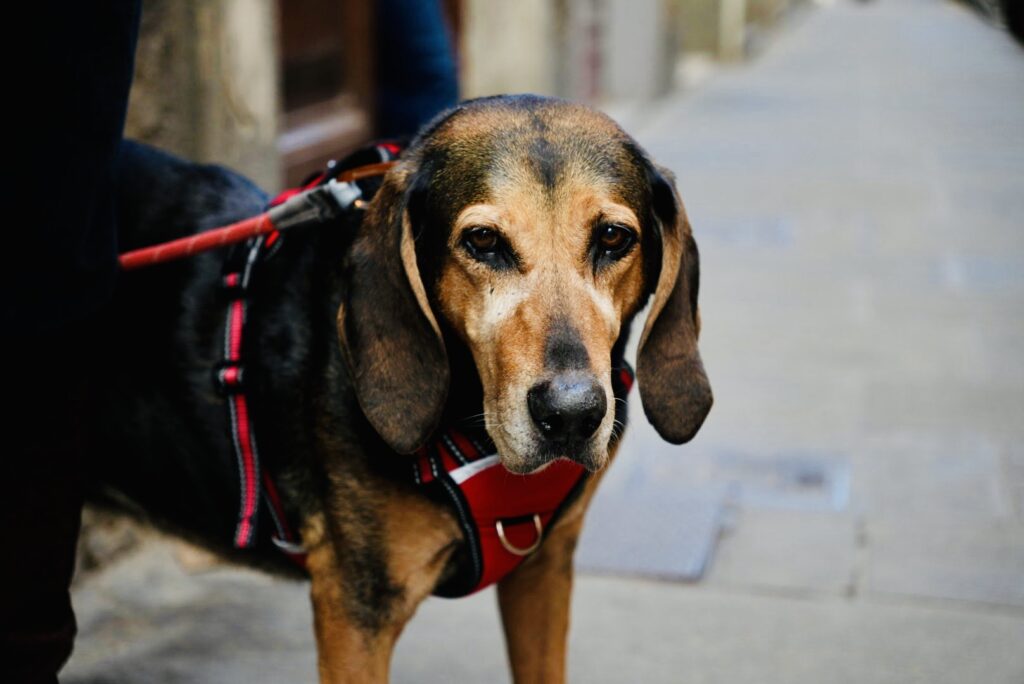
Lucy’s first time in Florence! She was not happy as there were so many people, and not enough green spaces, but she loved being around her family! (Photo credit: Richard Caccese)
7. Moving to Europe with a Dog: A Timeline from Vet Visit to Takeoff
The process of moving to Europe with a dog has strict, time-sensitive deadlines, and missing them can mean delays or even denied entry. Again, bookmark our friend Regina’s blog: Relocating an American Dog to France, and read it next!
Once you bring your dog in for your Health Certificate appointment with your USDA-accredited veterinarian, the clock starts ticking! The certificate must be issued within 10 days of travel to the EU. Your vet should submit the paperwork to the USDA on the same day of your appointment. Keep in mind, your pet’s rabies vaccination must be given at least 21 days before travel, well before this last appointment.
Many vets now submit your pet’s health certificate paperwork electronically to the USDA, but you will still receive the final certified copies by mail. Consider using expedited shipping (FedEx or similar) to avoid delays, and confirm whether the certified paperwork will be sent directly to you or to your veterinarian. Always pad your travel schedule by a few extra days, because any delay in receiving signed and stamped paperwork can jeopardize your plans. We recommend paying extra for airline tickets that are changeable or refundable in case you need to change your flight plans.
Checklist and Timeline for Moving to Europe with a Dog:
- Find a USDA-accredited veterinarian and schedule an appointment to review travel plans– 3-6 months before traveling
- Confirm your dog has been included on your flight reservation for cargo or in cabin- 3 months before traveling
- Update your dog’s rabies vaccination (if needed)- no less than 21 days before your trip!
- Schedule the Health Certificate appointment– 10 days before your flight
- Pay for priority shipping to/from the USDA!
- Ensure your dog’s crate, bedding, food, water, leash, pee pads, doggy diapers, etc., are ready to go.
- Reduce food and water consumption the night before
- Arrive at the airport early– no less than 3 hours before your flight
- Bring extra copies of everything!
- Try to relax.
Our journey to Italy with our dog Lucy began at the San Diego International Airport. We had arrived early; however, our transportation to the airport was challenging. Book a pet-friendly Uber in advance! Or confirm a friend can take you, your luggage, your crate, and your dog to the airport.
The next step was passing muster at the United Airlines counter. It was 4:30am, and I was so worried Lucy would pee all over the floor as we barely got a walk in before arriving. I slowly moved all of our bags and her through the maze to get to the check-in counter.
Pro Tip: Do not overpack! Most travelers moving to Europe with a dog often stay for a long time. Therefore, besides paying for your dog’s transportation, you will need to pay for any extra bags when you check in, making the process even longer.
We learned our lesson the hard way, and even though United Airlines allowed for bags over 75 pounds, for a fee, the Venice airport in Italy did not. We spent a good 40 minutes moving items around, and ended up checking an extra bag. Lucy, meanwhile, was lying at my feet ever so patiently. Looking up every so often to see if it was her time to pass inspection.
When it was time, the customer service agent reviewed Lucy’s paperwork very carefully. She was not warm and friendly, and asked me probing questions about her rabies vaccination and her final destination. Become familiar with your dog’s paperwork before you get to the check-in counter!
8. Preparing for International Arrival with Your Dog
While we planned out our move to Europe with our dog as best we could, we were stuck for three additional hours at Newark Airport waiting for our connecting flight. During this time, Lucy refused to use the pet-relief area. I didn’t blame her; the smell of urine was unbearable! To avoid embarrassment for her and for us, we packed dog diapers and pee pads.
Upon landing in Venice, we were ready for customs inspection. Keep all documents accessible and identify any pet relief areas in the arrivals terminal beforehand. Once you’ve cleared entry, if you are anything like me, you will probably cry out loud. This took 8 months of preparation, and I was certainly more stressed than Lucy throughout the whole process.
We were so incredibly proud of her. She did not have any accidents, and her tail was wagging when she walked out the doors at the Venice Airport. The woman at customs barely looked at her paperwork. She said, “Cane americano? No problem.” I was floored. More crying commenced.
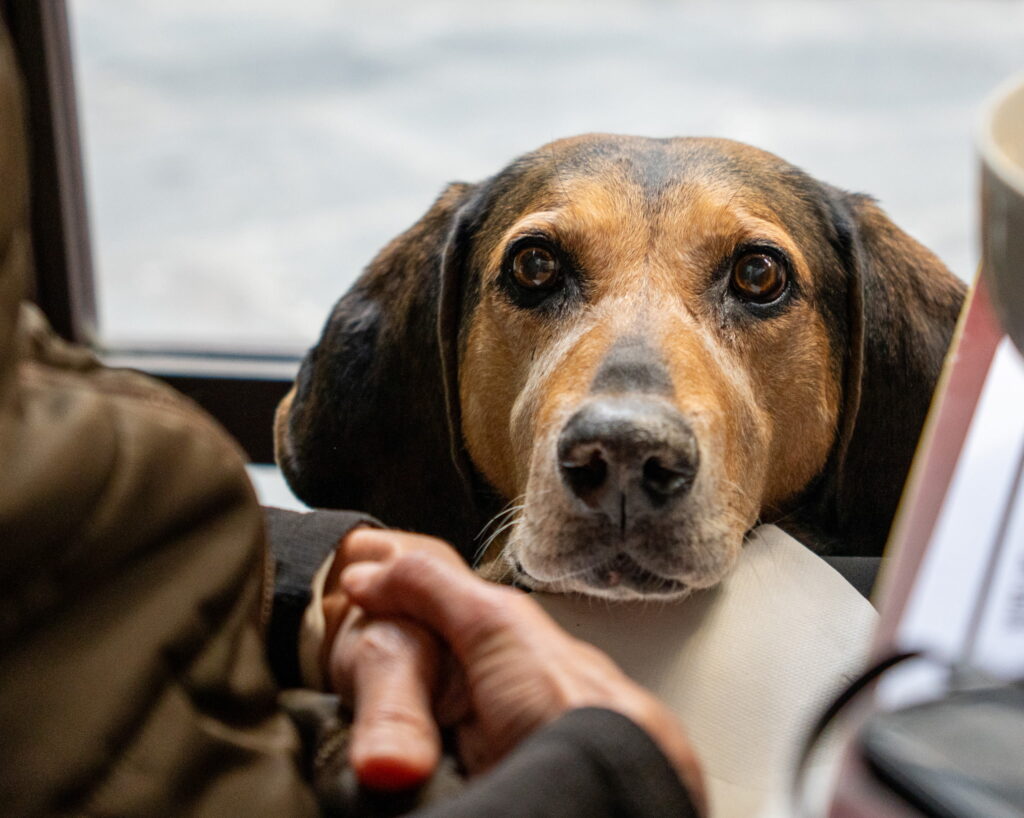
Lucy takes her first Italian train ride! In Italy, big dogs are allowed on trains, just make sure you buy a muzzle as it’s often required in public spaces. (Photo credit: Richard Caccese)
Final Thoughts on Moving to Europe with a Dog
While walking out of the airport in Europe might seem like the final step in a very long journey, the process should not end here. Before our trip got underway, we found a veterinarian in the town we planned to live in, ensured they spoke English, and were accepting new animals. Finding a local veterinarian is important, especially if you plan to stay with your dog in Europe for an extended period.
In addition, we also had to make an appointment at a local government agency, the Servizio Veterinario or Azienda Sanitaria, to get Lucy her EU Pet Passport. In Italy and much of the EU, an EU Pet Passport simplifies travel across European borders.
Next, if you are renting a car, taking a shuttle, staying at a hotel, or have booked an Airbnb at your destination, make sure they are pet-friendly and allow big dogs. I included photos and descriptions of Lucy in my emails to the landlord of the house we rented to make sure they would accept her. We also had to upgrade to a larger car rental to fit Lucy plus all of our luggage!
Moving to Europe with a dog, especially with a big dog, takes planning and patience, but it’s absolutely possible. I hope this helps you plan your next big adventure, and that it can include all four paws right next to you, where they belong. Here’s more from our blog series on traveling and living internationally:
- Digital Nomad Visa: The Truth Behind What it Takes to Work Remotely in Europe
- From Dream to Departure: 10 Steps to Leave the U.S. and Begin Living Abroad
Thanks for reading, and happy pet-friendly traveling with your furry companion!
Meredith Caccese McConvill, Top Rope Media
Recent Comments